Finance
The data definitions for Finance are split into:
- data for budget responsibility and budgeting;
- data on commitments and invoices;
- data on batch processing and mutations.
The figure below shows how the budget is structured and who has responsibility for it.
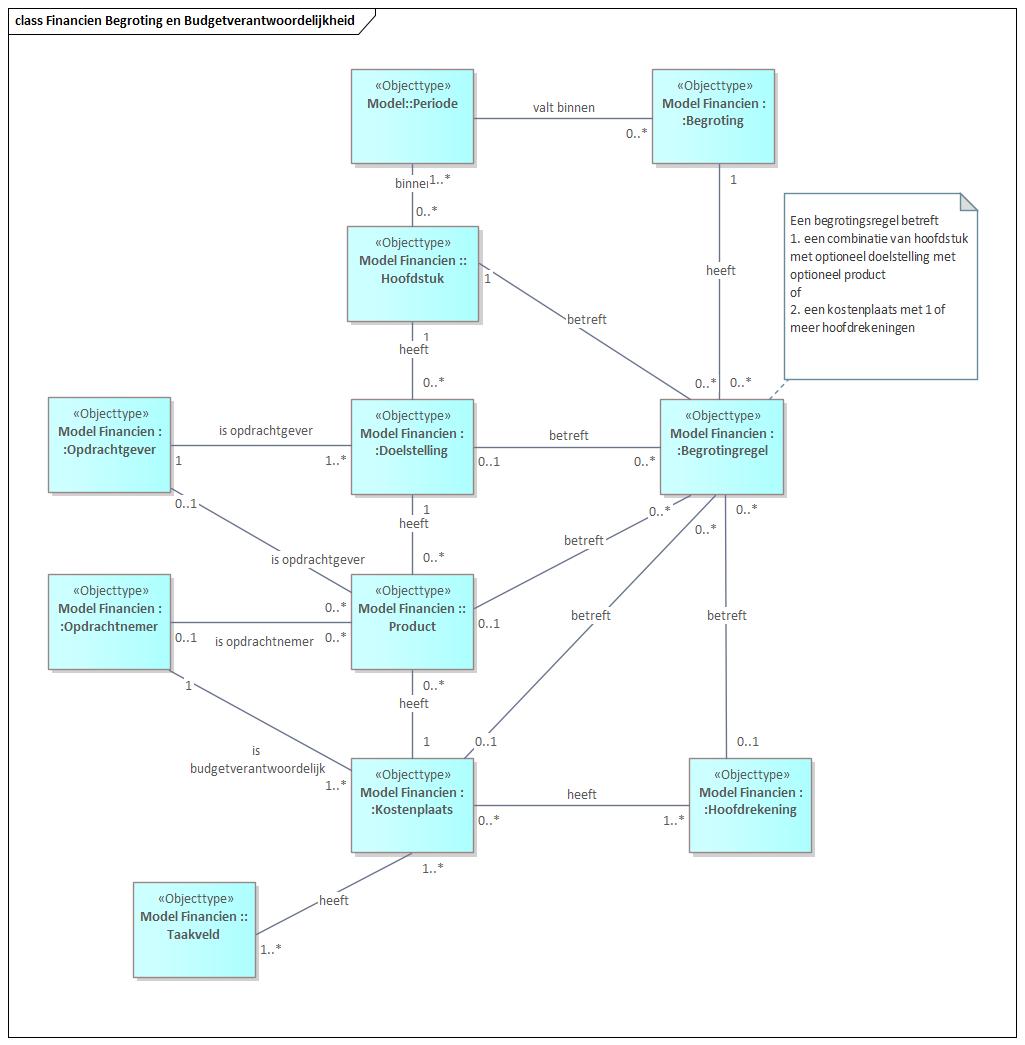
Diagram (in Dutch): the hierarchical budget structure and budget responsibilities.
The Budget entity is hierarchical: chapters, objectives, products and cost centres. Each of these budget components has Budget lines that add up to a balanced Budget. In other words, the sum of all budget lines of the chapters of a Budget adds up to the Budget line of the Budget within a given Period. The same applies to objectives versus a Chapter, products versus an Objective and cost centres versus a Product.
Cost centres can have multiple main accounts to distinguish kinds of costs. Examples include: investment cost centre, departmental cost centre, project cost centre and municipal real-estate cost centres. Clients (assigners) can be clients to objectives or products. Contractors (assignees) are budget-responsible for products or cost centres. Clients are usually programme managers; contractors are usually heads of department.
The next figure shows how commitments and invoices are structured.
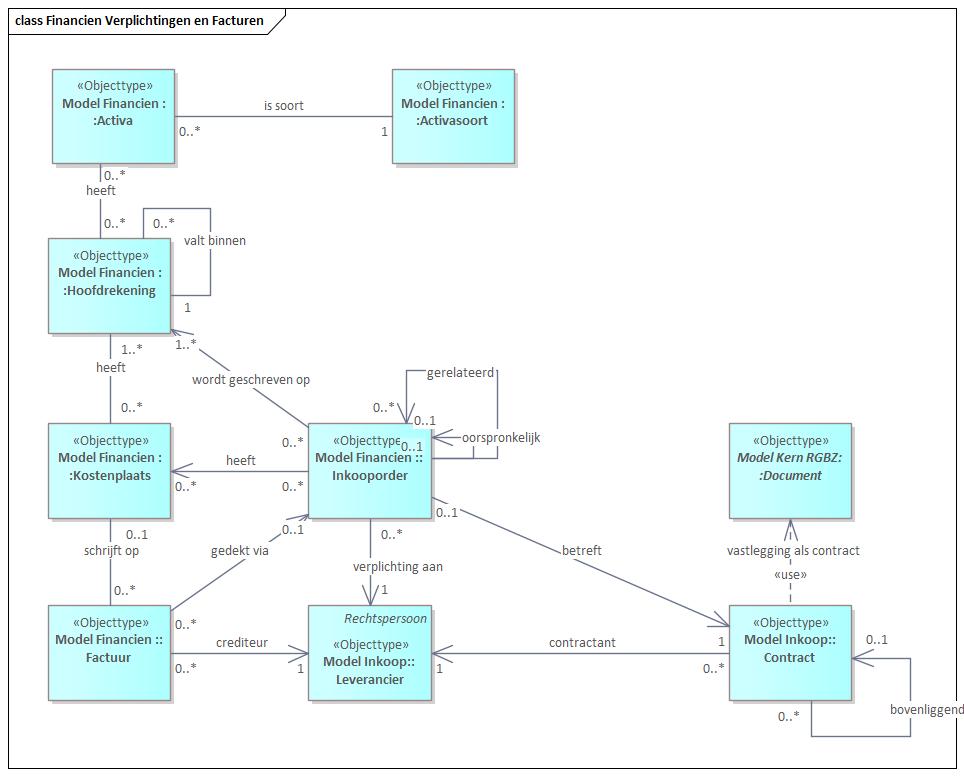
Diagram (in Dutch): commitments and invoices, with link to cost centres and main accounts.
To enter a commitment with a Creditor (often a supplier), a Purchase order is needed. Purchase orders can have multiple cost centres, themselves with different main accounts. From a Purchase order, postings are made to one or more main accounts, distinguishing cost types. Incoming invoices are linked to the Purchase order and so to the Cost centre. The figure also shows how Assets are linked to main accounts.
The next figure shows mutations. Mutations are changes from one main account to another — for budget and expenditure from Budgeted to Purchase order or from Purchase order to Actual; for income from Payment in transit to Liquid. Mutations are based on various events such as: processing an incoming Batch, an invoice or a bank statement. Batches, invoices and bank statements each have multiple lines, and per line a Mutation is created and funds are written from one main account to another, as described.
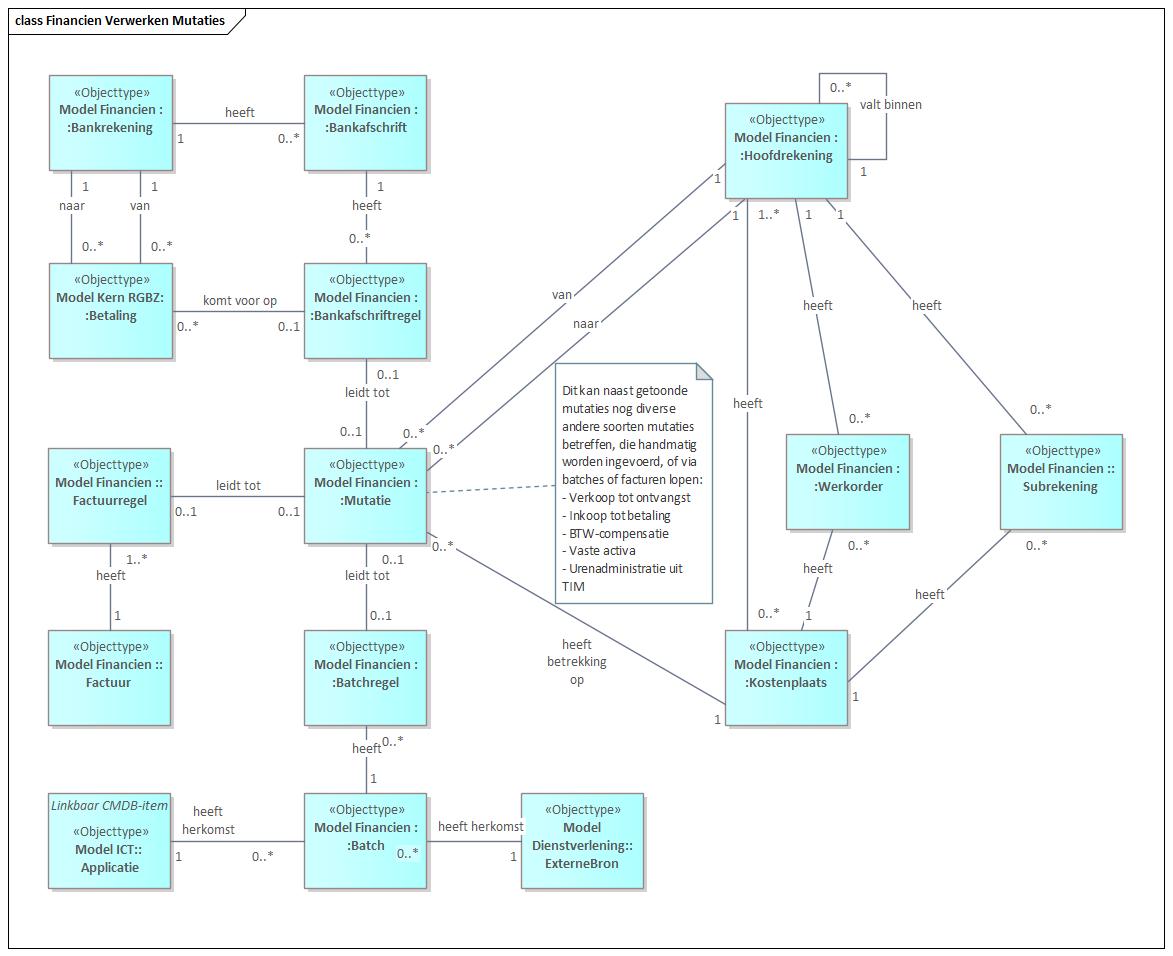
Diagram (in Dutch): processing mutations between main accounts based on batches, invoices and bank statements.
Mutations always relate to a Cost centre and may be written to a Work order (not strictly enforceable) or Sub-account (linked to cost centre because of VAT). In addition to the modelled mutations there are various mutations created and posted manually or automatically within GFS, such as:
- Sales-to-receipt.
- Procure-to-pay.
- VAT compensation.
- Fixed assets.
Debtors and creditors derive from Legal Entity — they may be natural or non-natural persons. Clients (assigners) and contractors are linked to the Function, not to the person, so these responsibilities are decoupled from the actual office holder. See the next figure.
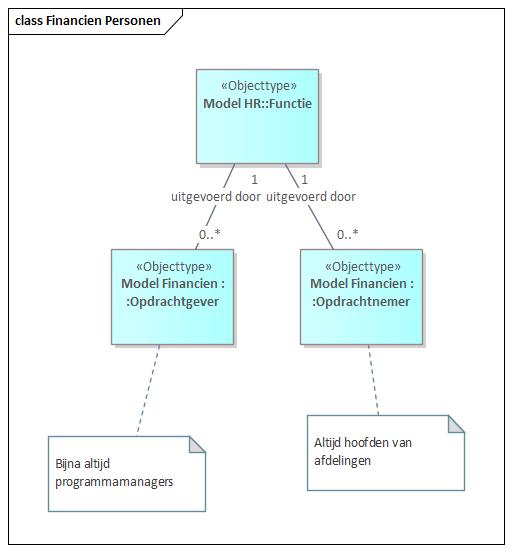
Diagram (in Dutch): how persons relate to Finance entities (debtors, creditors, clients, contractors).