Civil Affairs
The entities used in Civil Affairs are derived directly from the RSGB. The administration of persons is fully placed under Resident and Registered Person. Resident defines residents; Registered Person defines residents with Dutch nationality, conferring voting rights and similar entitlements. The elaboration is shown in the figure below.
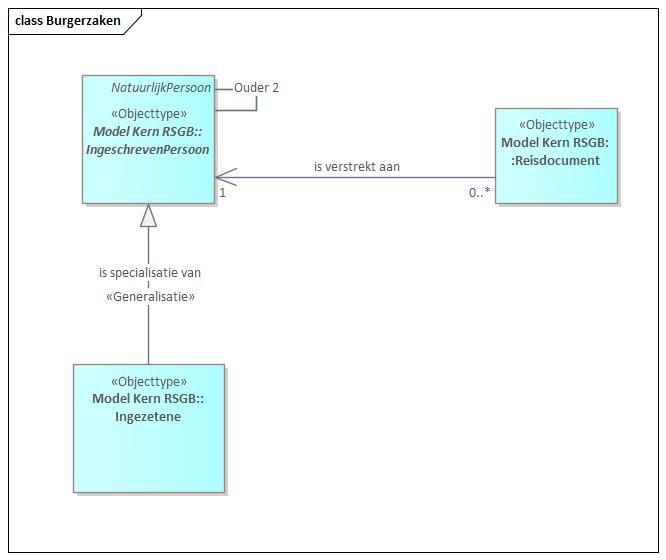
Diagram (in Dutch): data model for Civil Affairs (Burgerzaken), derived from RSGB.
Registered persons may have a driver's licence and travel documents (passport or identity card). Resident and Registered Person are referred to in the RSGB as subjects. The above model relies heavily on this. The next figure shows the full elaboration as applied in the GGM.
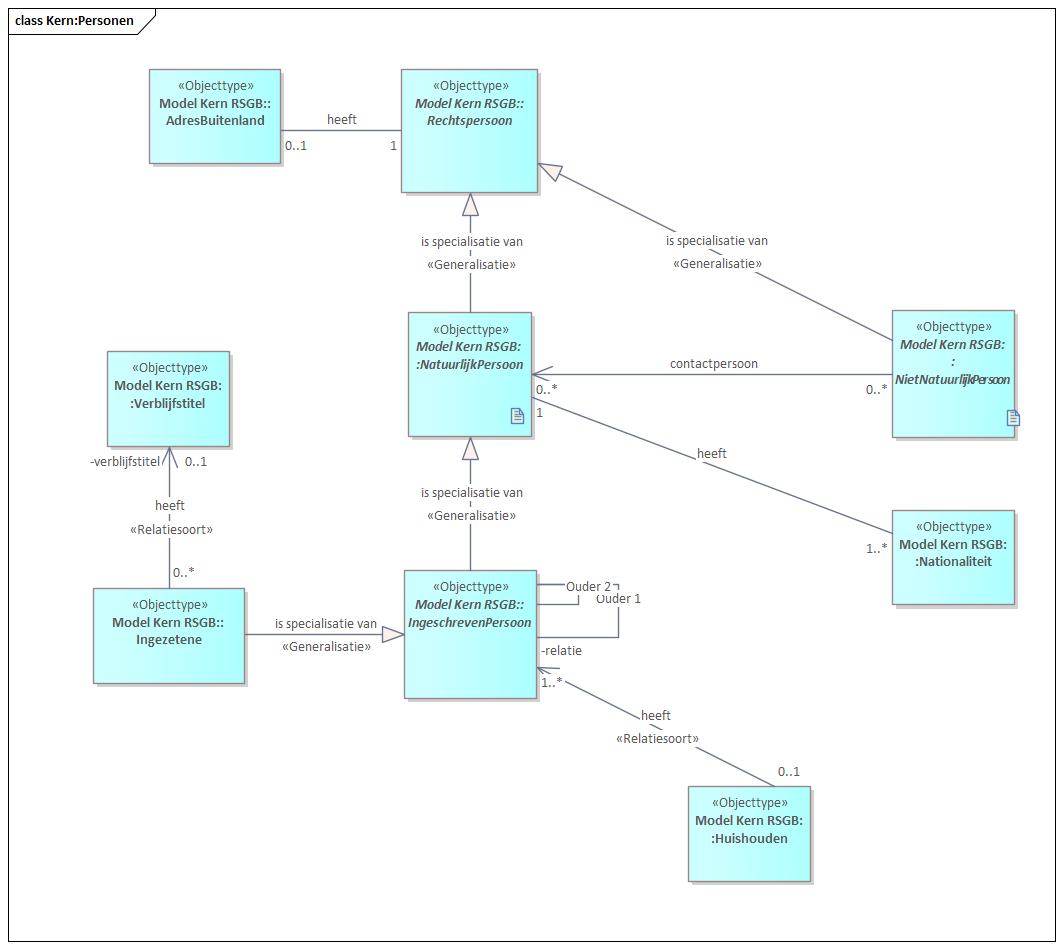
Diagram (in Dutch): the full RSGB-based subject model used in the GGM.
The elaboration of front-desk activities for Civil Affairs leans heavily on the service-delivery model. The figure shows how Customer Contact is linked to Case from the RGBZ. A Customer Contact may relate to a Case; an Application or Report may lead to a Case.
Compared to the RGBZ, the model is extended with Payment and Levy — the municipality imposes a Levy for many products and services, on which a Payment must be made.
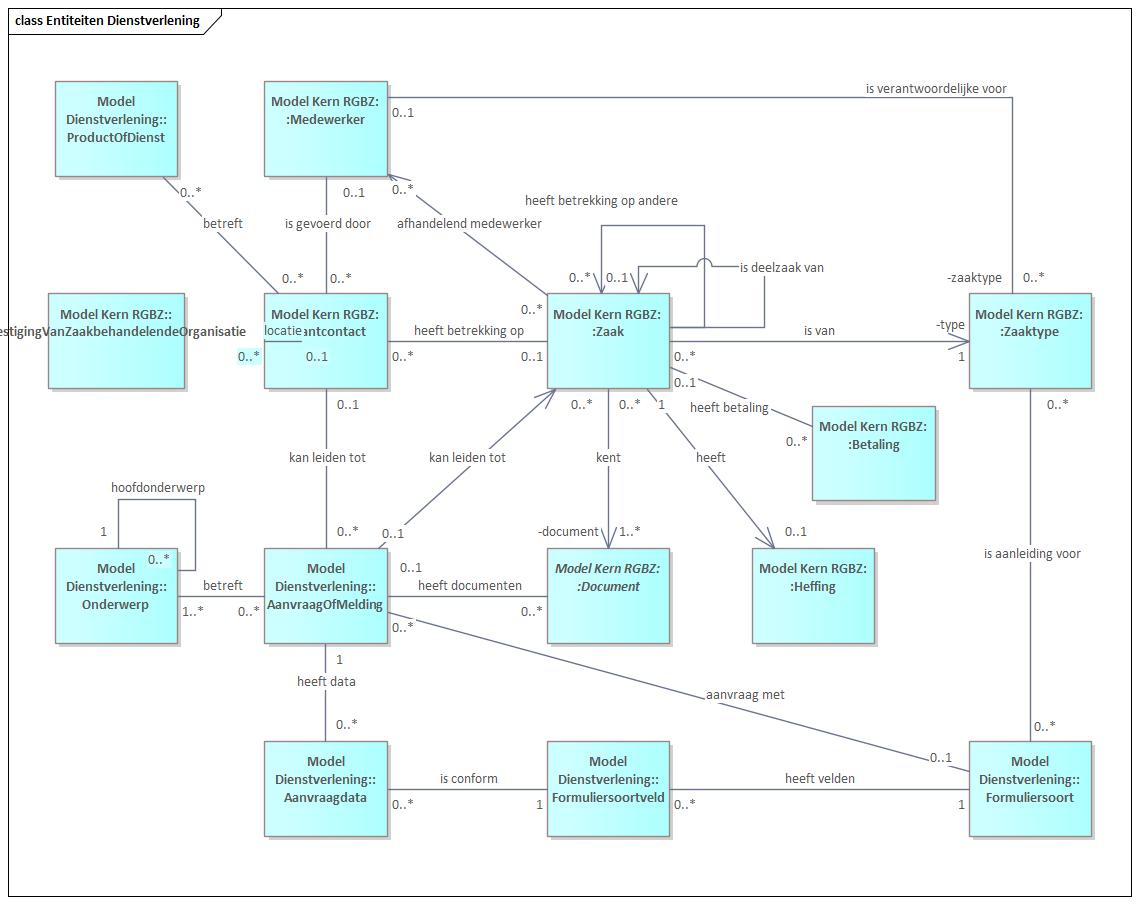
Diagram (in Dutch): object types for Service Delivery, including Customer Contact and the link to Case.
The figure below shows the relationship of Stakeholder to Customer Contact and Case.
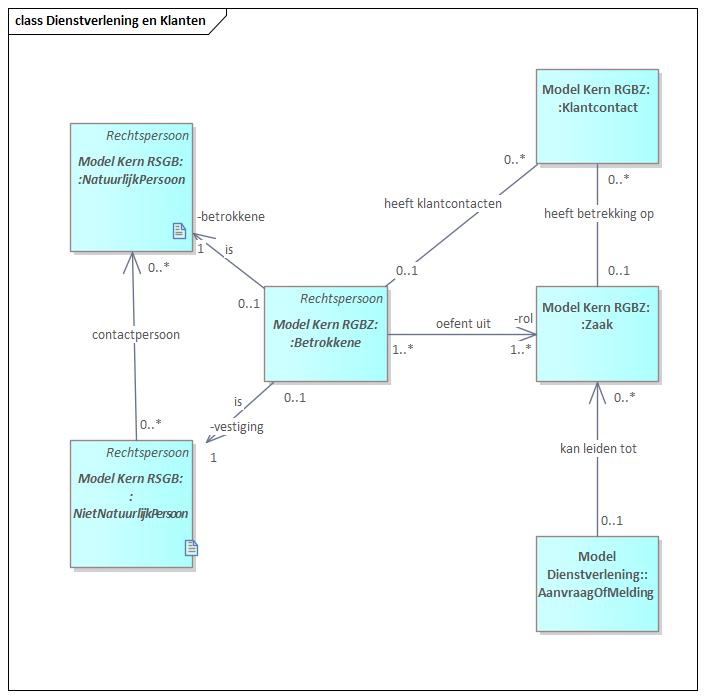
Diagram (in Dutch): the Stakeholder (Betrokkene) object types and their relationships.